
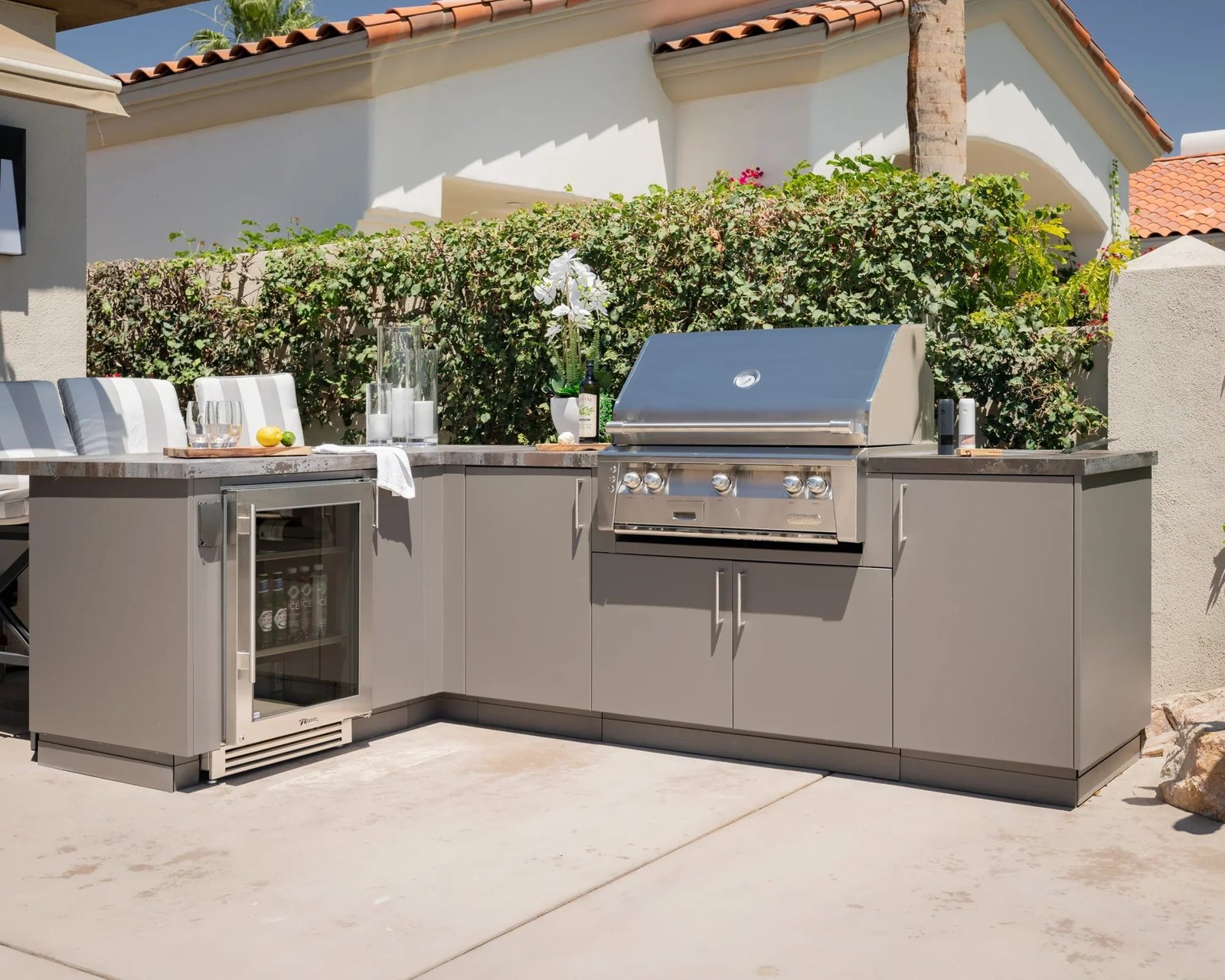
Sun, salt, rain, heat and cold get at everything, all year, with nothing between them and the cabinetry. Indoor materials do not survive it — that much every serious outdoor kitchen agrees on. What they do not agree on is what to build it from instead.
There are three honest answers to that question, and the right one depends on where the kitchen actually sits: how much salt reaches it, how much sun lands on it, whether it is covered, and what you want it to look like. We build all three, so we have no reason to talk you into one of them.
Below is what each construction is, what it does well, and what is worth knowing before you choose it. Same length of run, same appliances — what changes is the construction, the look, and how each one handles exposure.
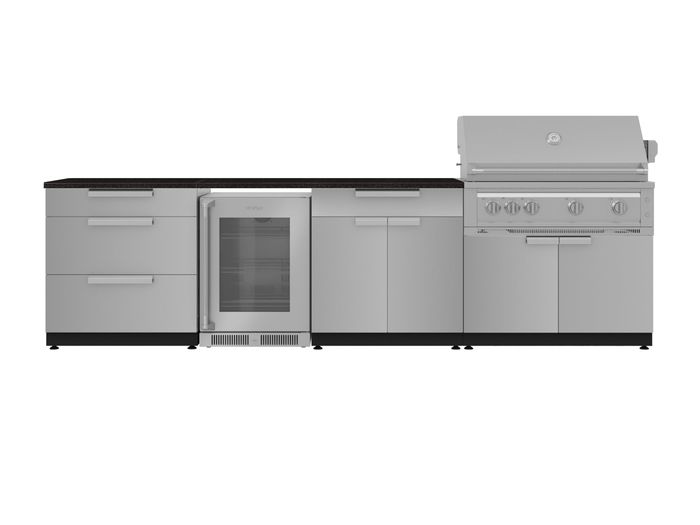
The material most outdoor kitchens in America are built from, and the reason it is the default is that it is proven, serviceable and available in more configurations than anything else.
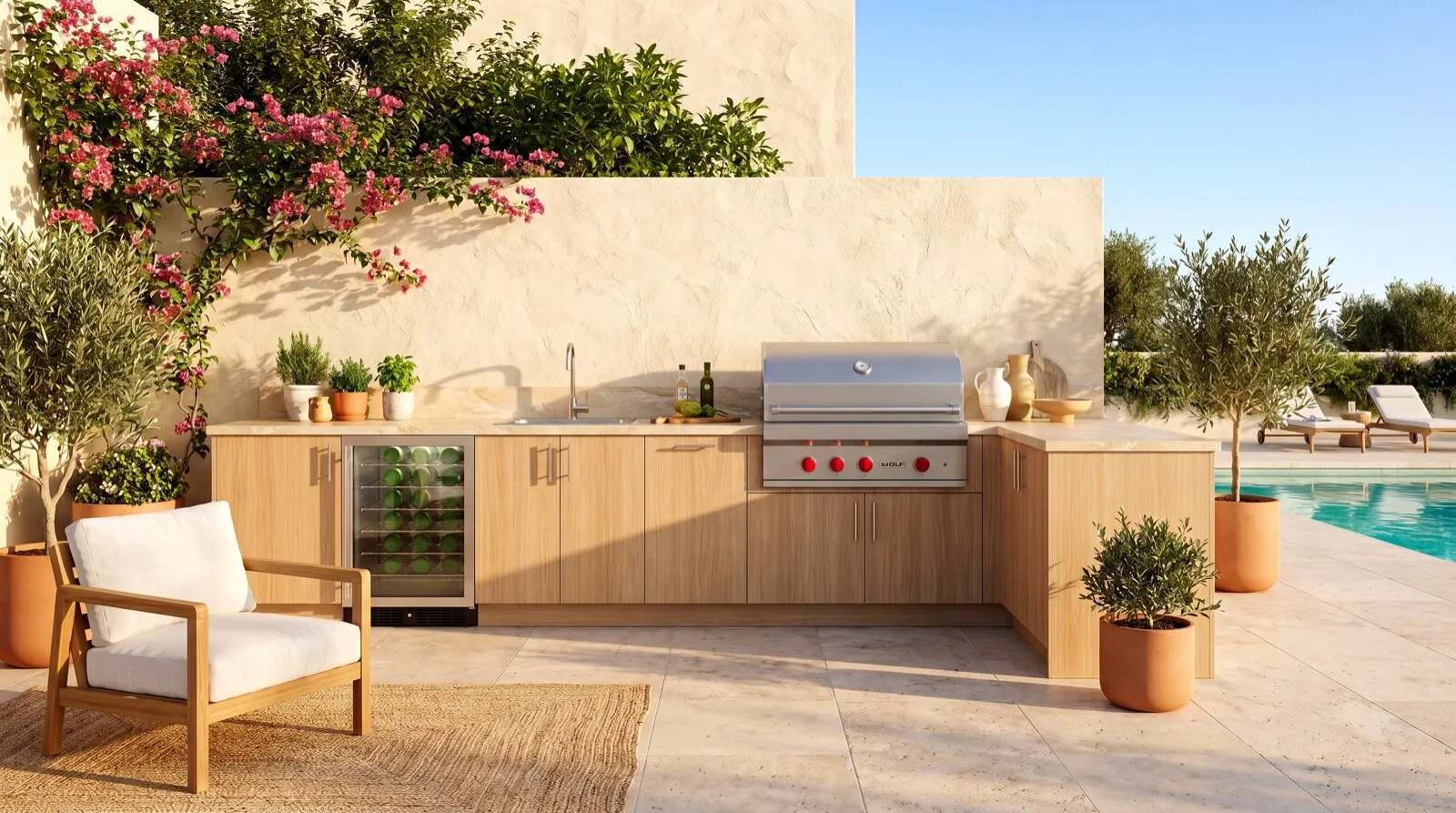
Outdoor cabinetry built the way indoor European cabinetry is built — a decorative faced door on an engineered core, with a phenolic box behind it — engineered for outdoor exposure rather than adapted from an indoor product.
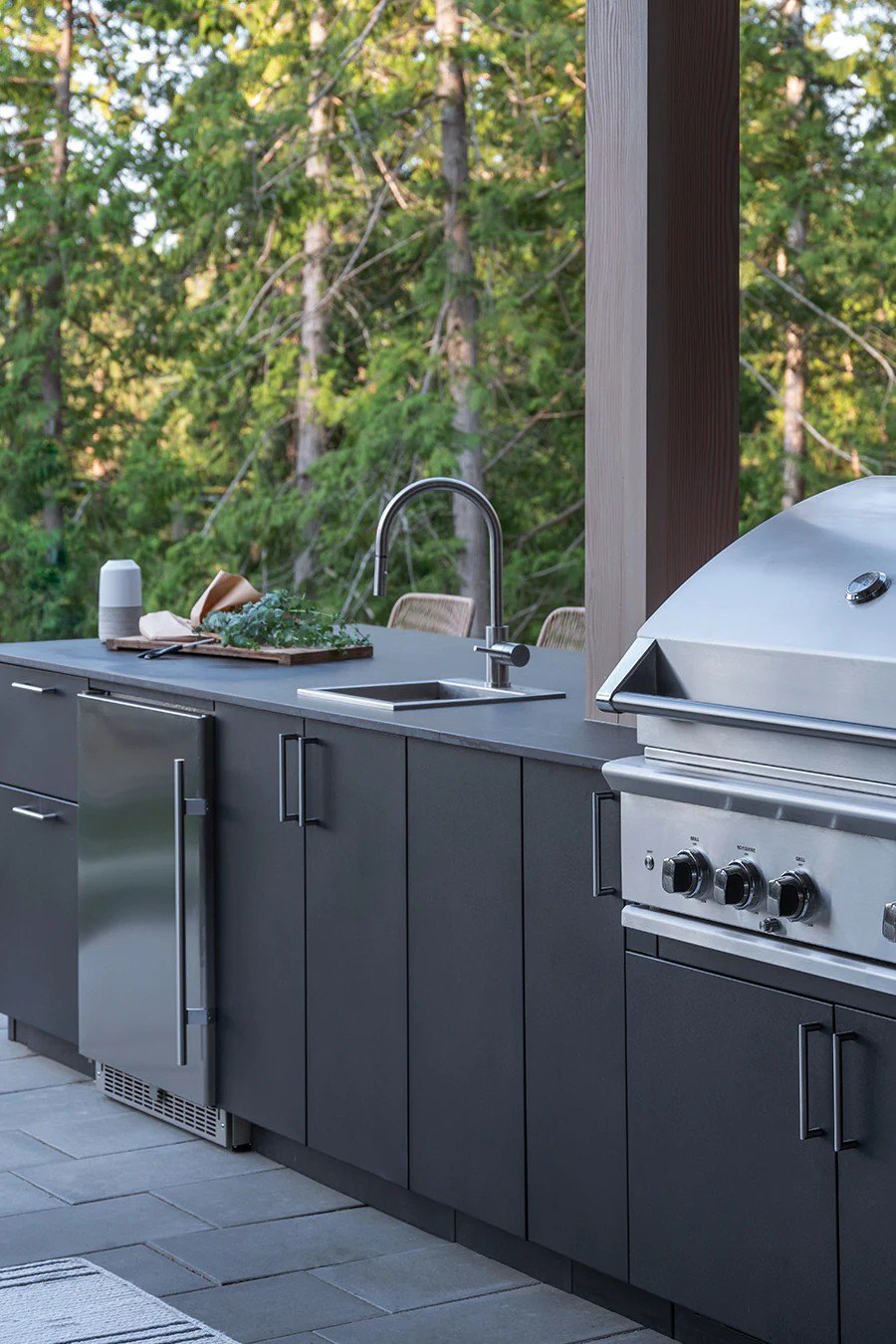
Cabinetry made from marine-grade aluminium — the specification to reach for where the exposure is worst.
Click any photograph to see the construction it is built from. Manufacturer photography for the lines we carry.
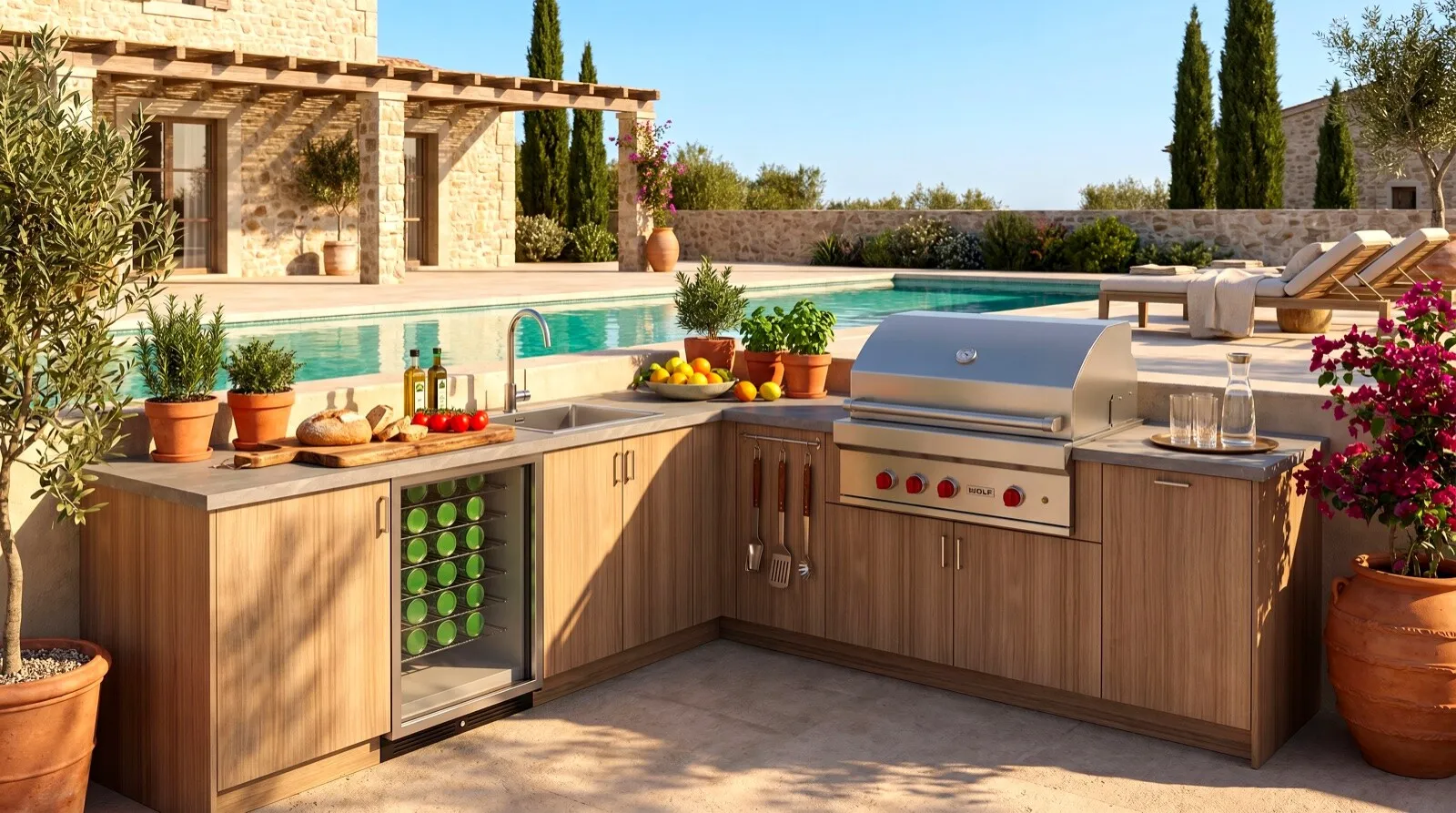 Poolside run with grill and refrigeration
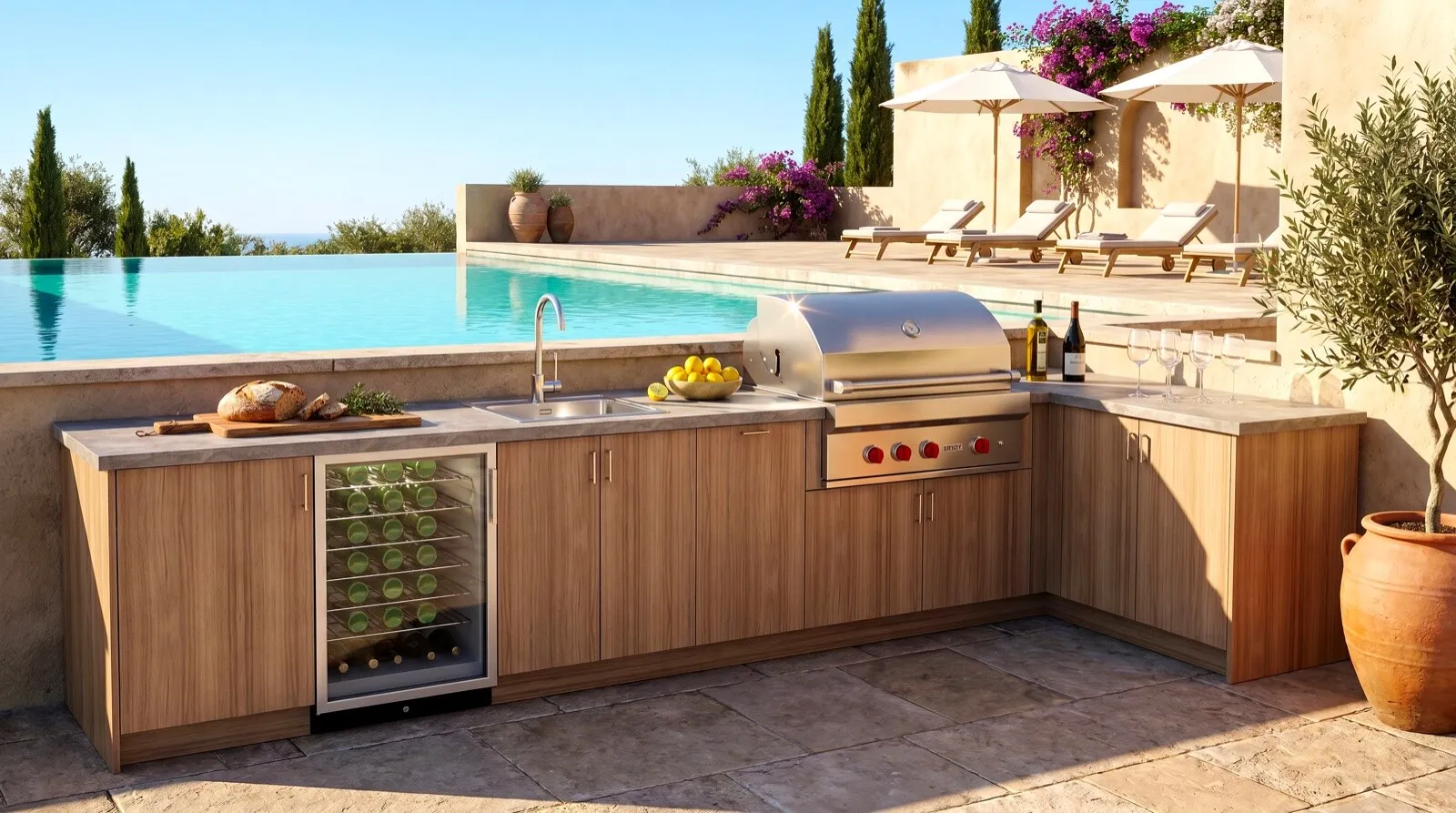 Wood-look doors under a stone counter
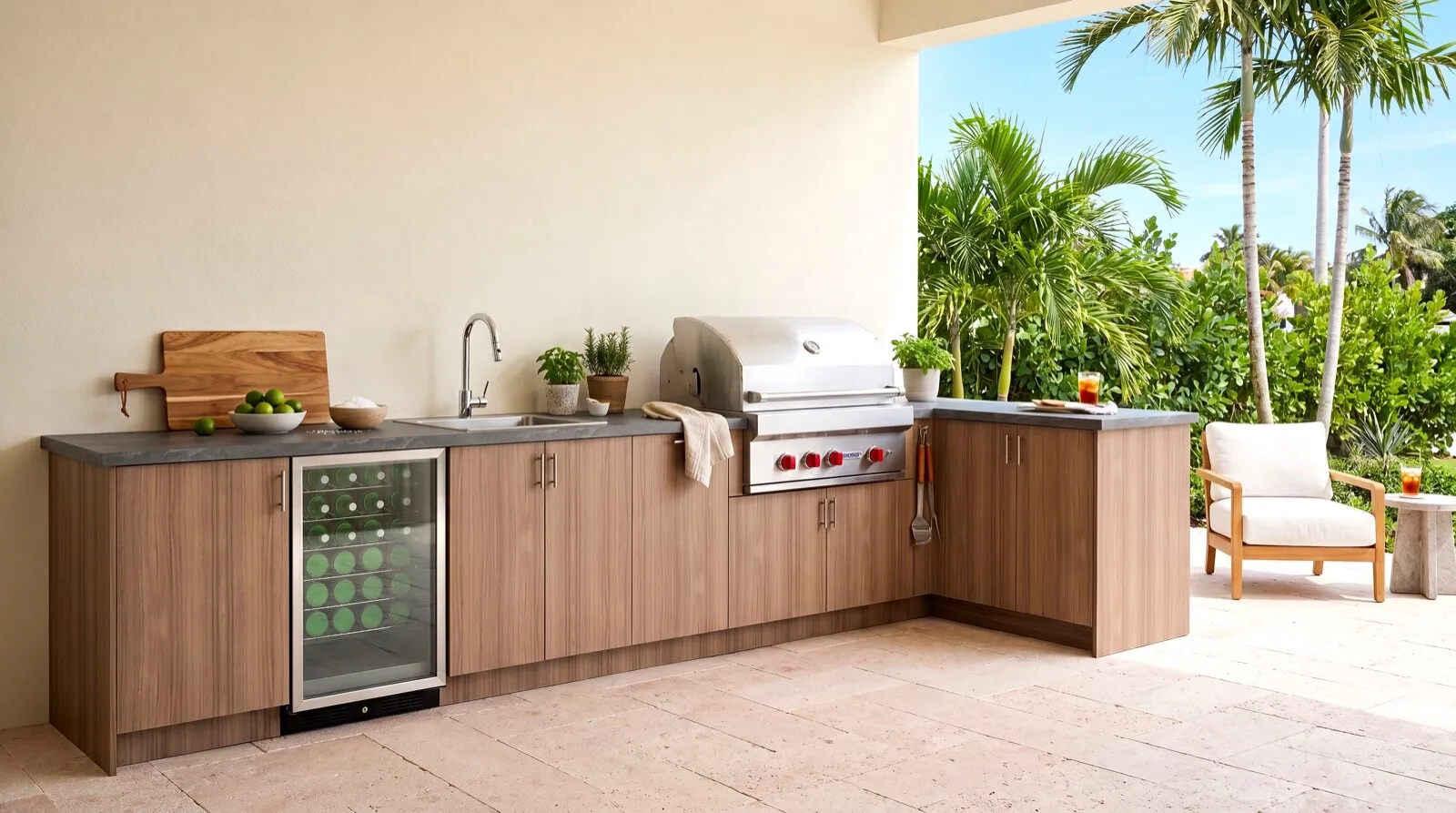 L-shaped run beneath a pergola
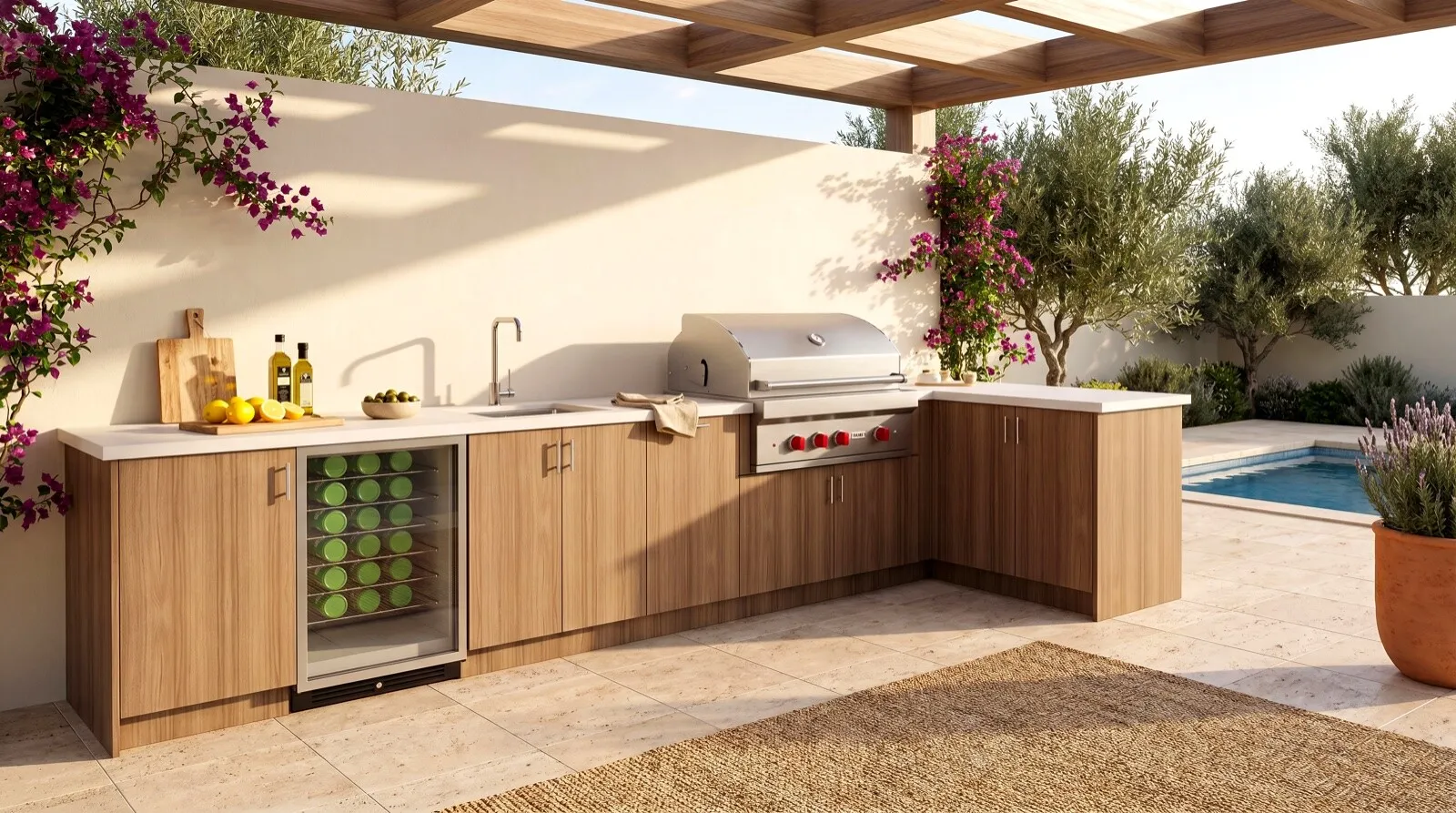 Long run with sink and wine storage
Compact run against a garden wall
Marine-grade aluminium in a courtyard
Covered terrace in a dark finish
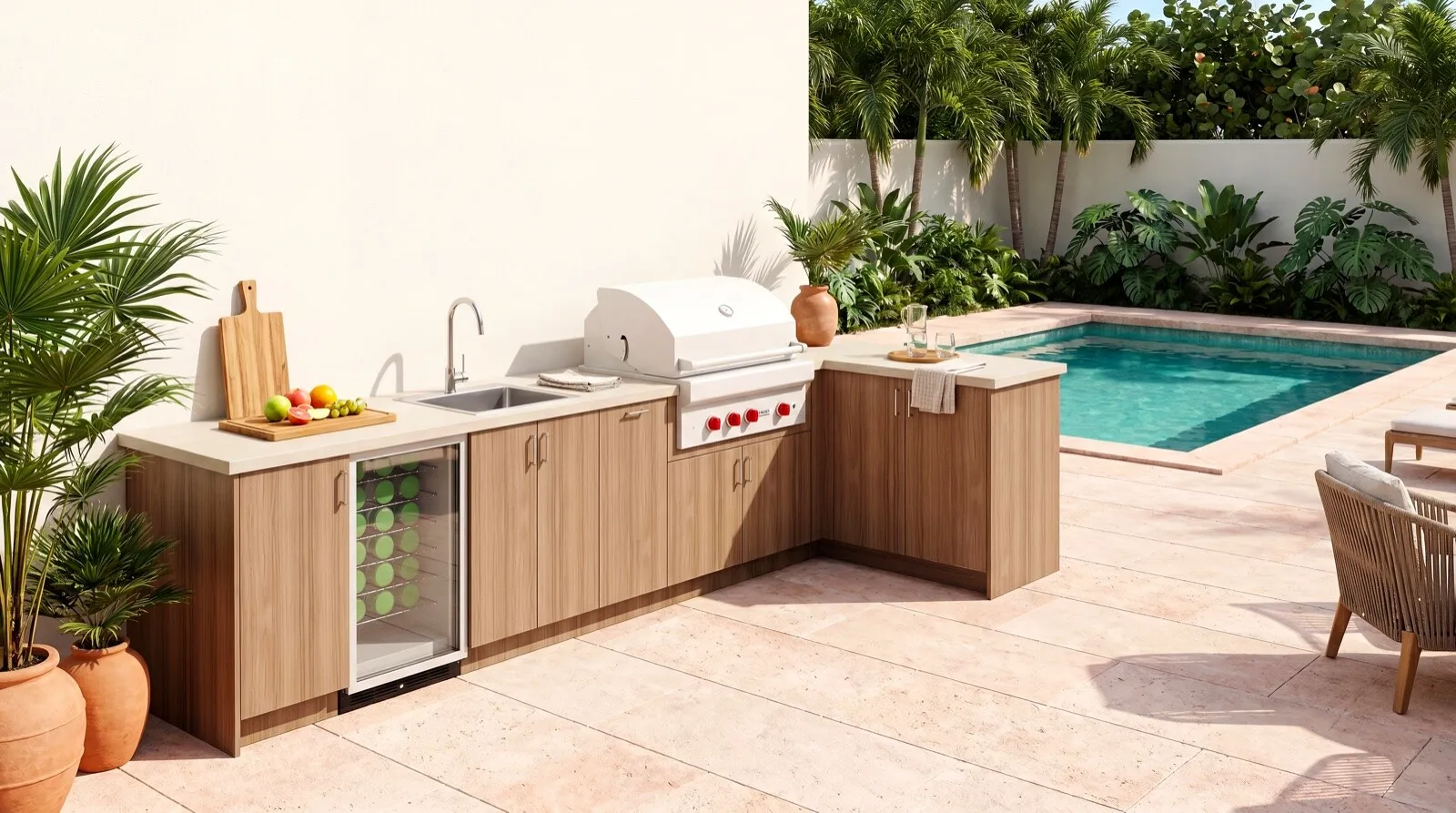 Poolside with a full appliance run
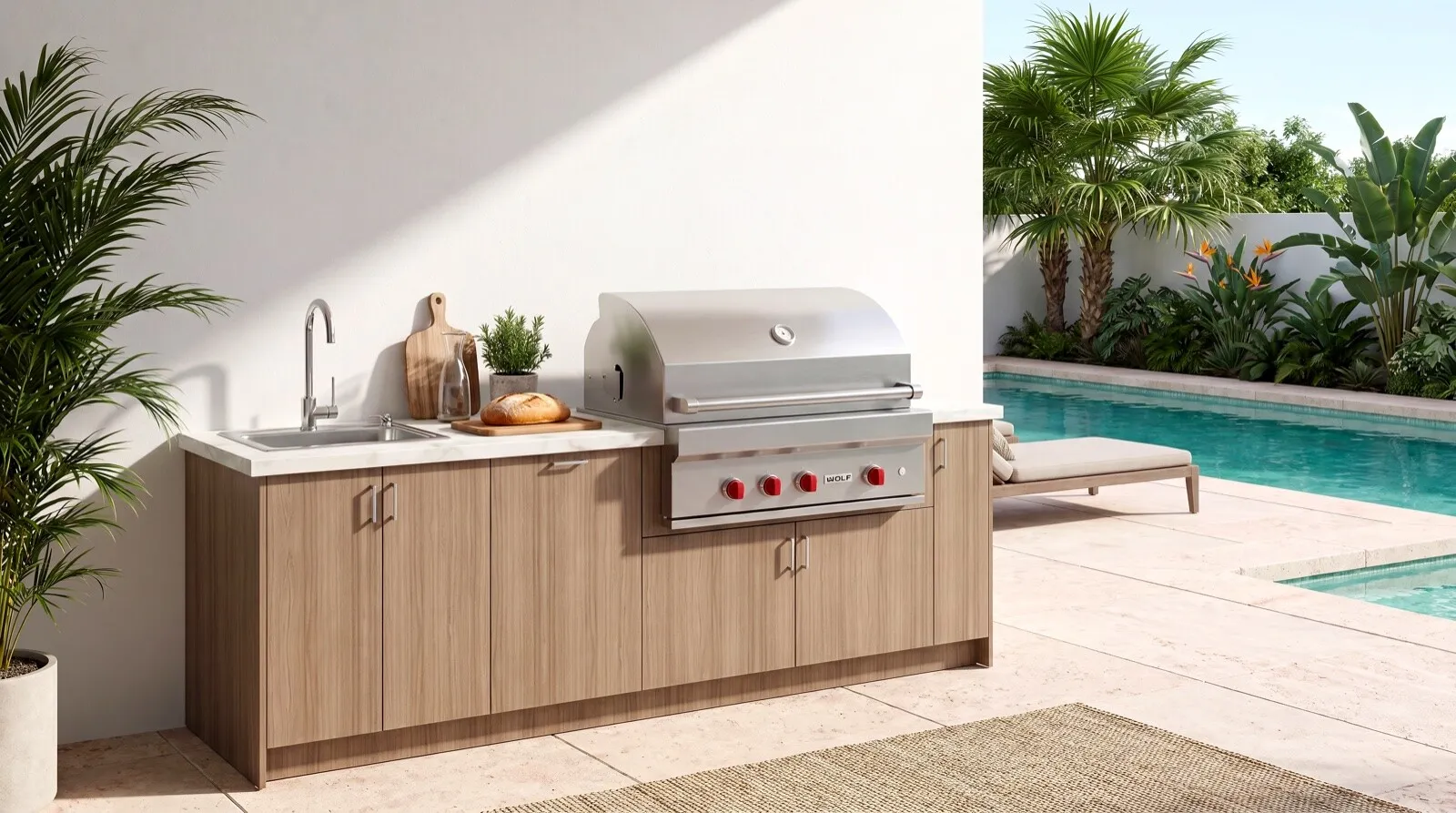 Straight run with sink and grill
 Louvered pergola over the terrace
 The same pergola at dusk
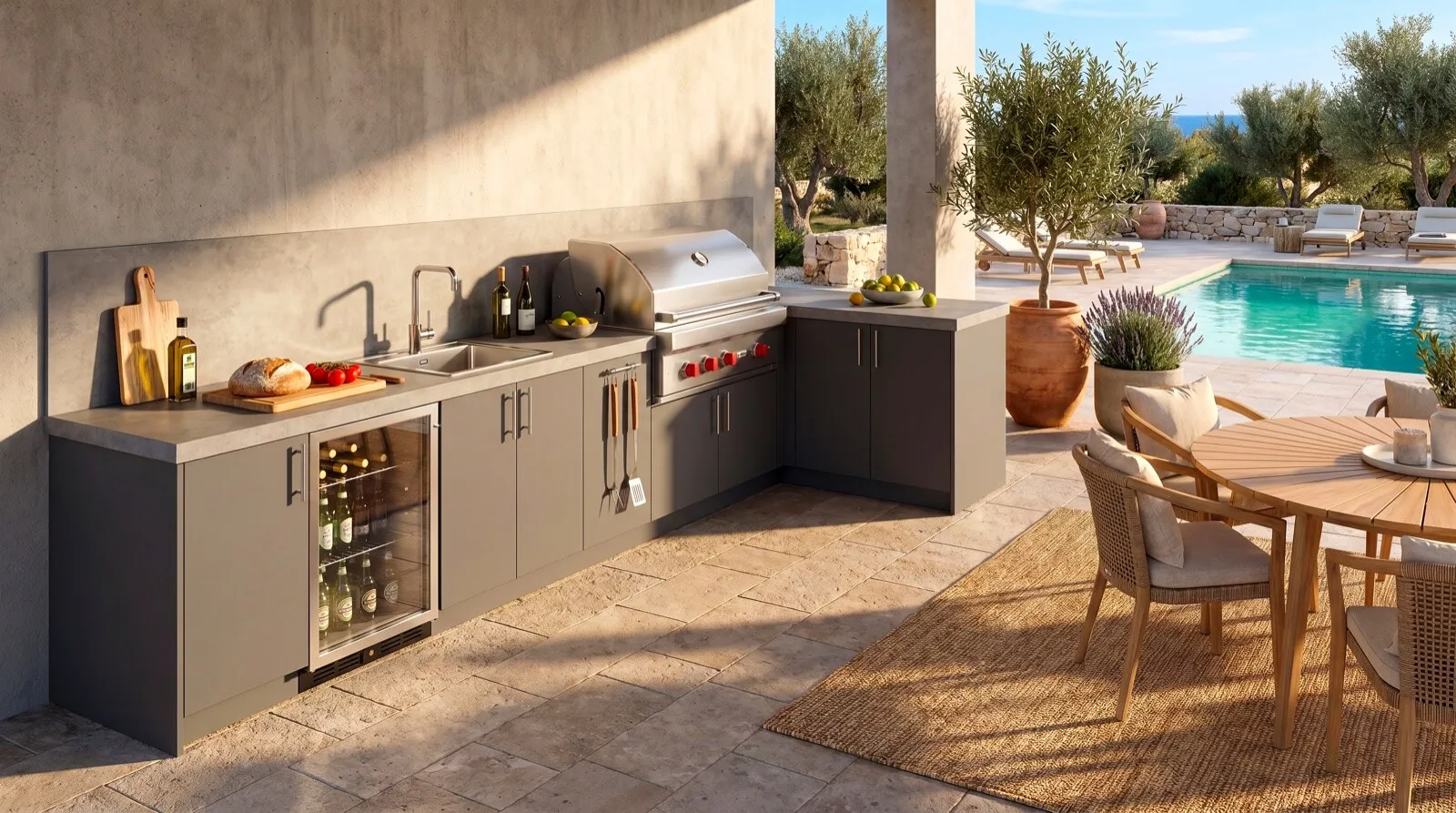 Stainless run beside a dining terrace
| Stainless Steel | European Climacore | Marine-Grade Aluminium | |
|---|---|---|---|
| Look | Professional, metallic | Wood-grain and stone-look decors | Powder-coat colour, flat or fluted |
| Door | 304 stainless — louvered, solid, tempered glass, classic, shaker | Climacore, UV-protected, EN 335 Use Class 4 | Marine-grade aluminium — flat or fluted profile |
| Cabinet box | 304 stainless | ½" HPL phenolic, or ¾" Climacore for wall and tall | Marine-grade aluminium |
| Hardware | Stainless | Stainless soft-close, runners rated to 110 lb | 304 stainless |
| Finishes | 4 door styles across two collections | 5 door finishes, 10 Dekton counters, 2 handles | 6 finishes, 2 door profiles |
| Range | Widest — hundreds of configurations | 24 standard modules | Configured to the run |
| Best where | Covered terraces, patios and most gardens | Covered outdoor rooms and warm, interior-led design | Oceanfront, rooftops and severe exposure |
| Worth knowing | Shows fingerprints; wants rinsing in salt air | Engineered core rather than metal | Narrowest palette; marks more easily than steel |
Specifications current at 16 September 2026. Cabinetry specification only — appliances, counters and structure are quoted separately.
Under a roof, on a covered lanai, with walls on two sides? All three work — pick on looks and budget. Open to the sky, within sight of salt water? The metals are the safer specification, and aluminium is the most conservative of the two.
If the outdoor kitchen is visible from the living room and you want it to belong to the house, the European construction is the one that gets there. If it sits with the grill and the pool equipment and you want it to look capable, stainless is the natural read.
A two-cabinet grill island and a fifteen-foot run with a sink, refrigeration, storage and a bar are different projects. The stainless range covers the most ground at the most price points; the other two are configured to the run.
The honest answer to the question everyone asks: all three will outlast an indoor cabinet put outside by a wide margin. None of them is maintenance-free. The difference between them is what kind of maintenance, and what it looks like while it is doing its job.
Cooking, refrigeration and ventilation rated for outdoor installation — specified with the cabinetry so the cut-outs, clearances and utilities are right the first time.
It depends on exposure first. Under a roof or on a covered lanai, all three work and you choose on looks and budget. Open to the sky and within sight of salt water, the two metals are the safer specification and aluminium is the most conservative of the two.
Aluminium does not rust. Stainless does not rust in normal use, but in direct unrelieved salt air it wants rinsing down as part of ordinary maintenance — no metal is maintenance-free in that setting. Climacore is not metal at all; its doors are rated for direct water contact.
Yes — that is what the Climacore construction is for. Wood-grain and stone-look decors on a core engineered for outdoor exposure, rather than real timber that will move and grey.
Yes. Grills, kamados, pizza ovens, griddles and side burners, plus outdoor-rated refrigeration, ice and ventilation from the same manufacturers we specify indoors.
Both are available. The stainless range includes pre-configured and customisable sets; Climacore is assembled from 24 standard modules; aluminium is configured to the run.
We install. Levelling, sealing and utility coordination are part of the scope, and the kitchen is snagged before handover.
Book a consultation or send us a plan. We will tell you which construction suits the position before we quote anything.
Book Your Consultation